Four products, one rule: a number stays attached to its source.
The table below shows which product answers which problem, and for whom — or we can work it out with you.
Which product, which problem, for whom
| Product | The problem it answers | Who it is for |
|---|---|---|
| UpcyMan | The cheque book, customer balances and stock on the floor disagree. | Facilities whose spreadsheets have stopped reconciling |
| UpcyCarbon | The carbon figure was produced once and cannot be reproduced a year later. | Exporters whose EU customers ask for embedded-emissions data |
| Dima | A question about your own data takes days to answer. | Owners and managers whose data sits across an ERP, spreadsheets and databases |
| UpcyOps | A commodity trade runs on email, spreadsheets and chat, and nobody can say which document is missing while the vessel is at sea. | Trading houses moving commodities by vessel and working with letters of credit |
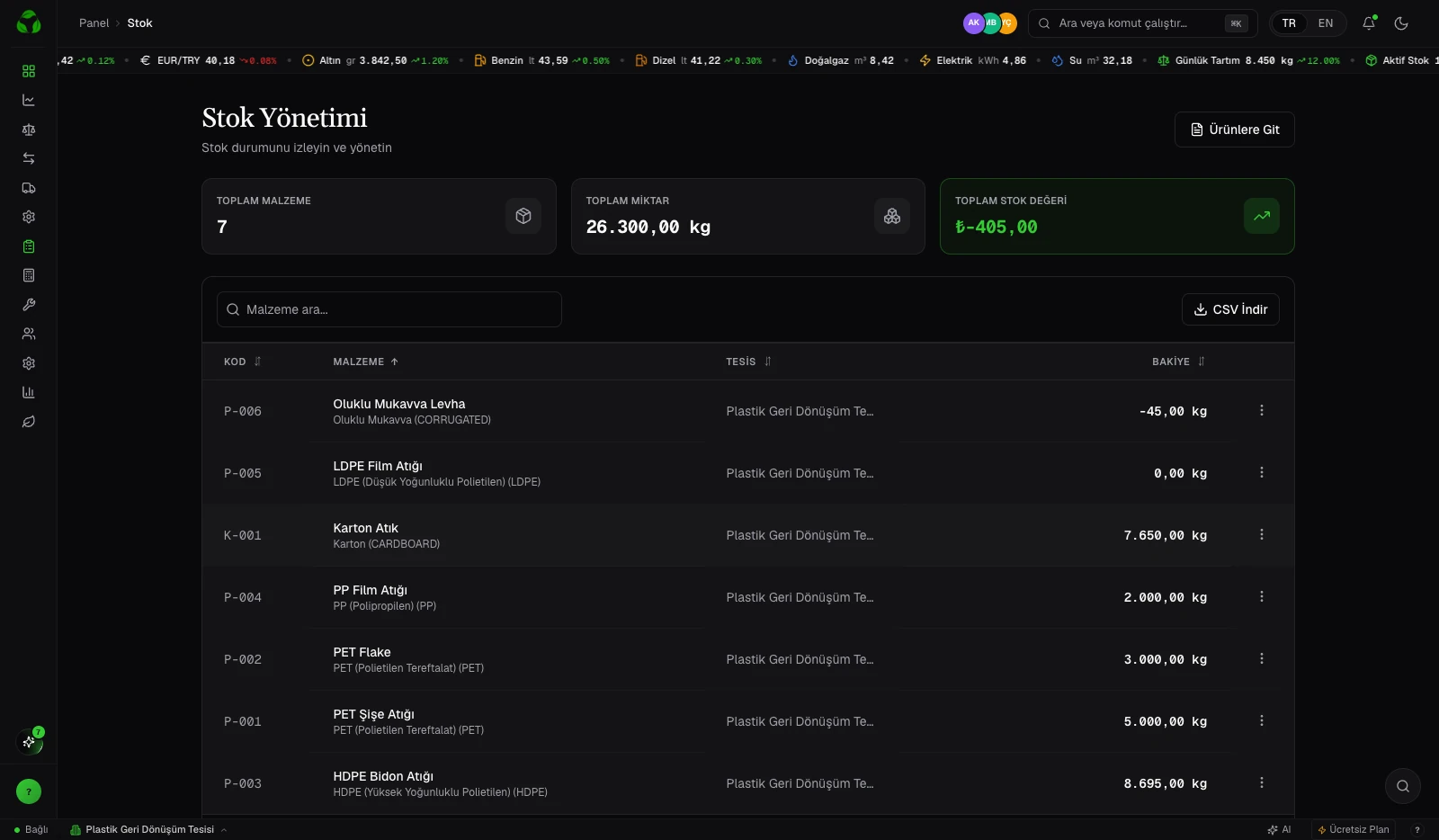
UpcyManModular ERP
Operations and accounts in one record, where every movement leaves a trail.
The full story is on the product's own site.
The problem
At month-end three records disagree: the cheque book, the customer balances and the stock on the floor. Work that runs on spreadsheets, a notebook and a messaging group stalls at reconciliation, and nobody can say which figure is right.
What it does
Operations and accounting together
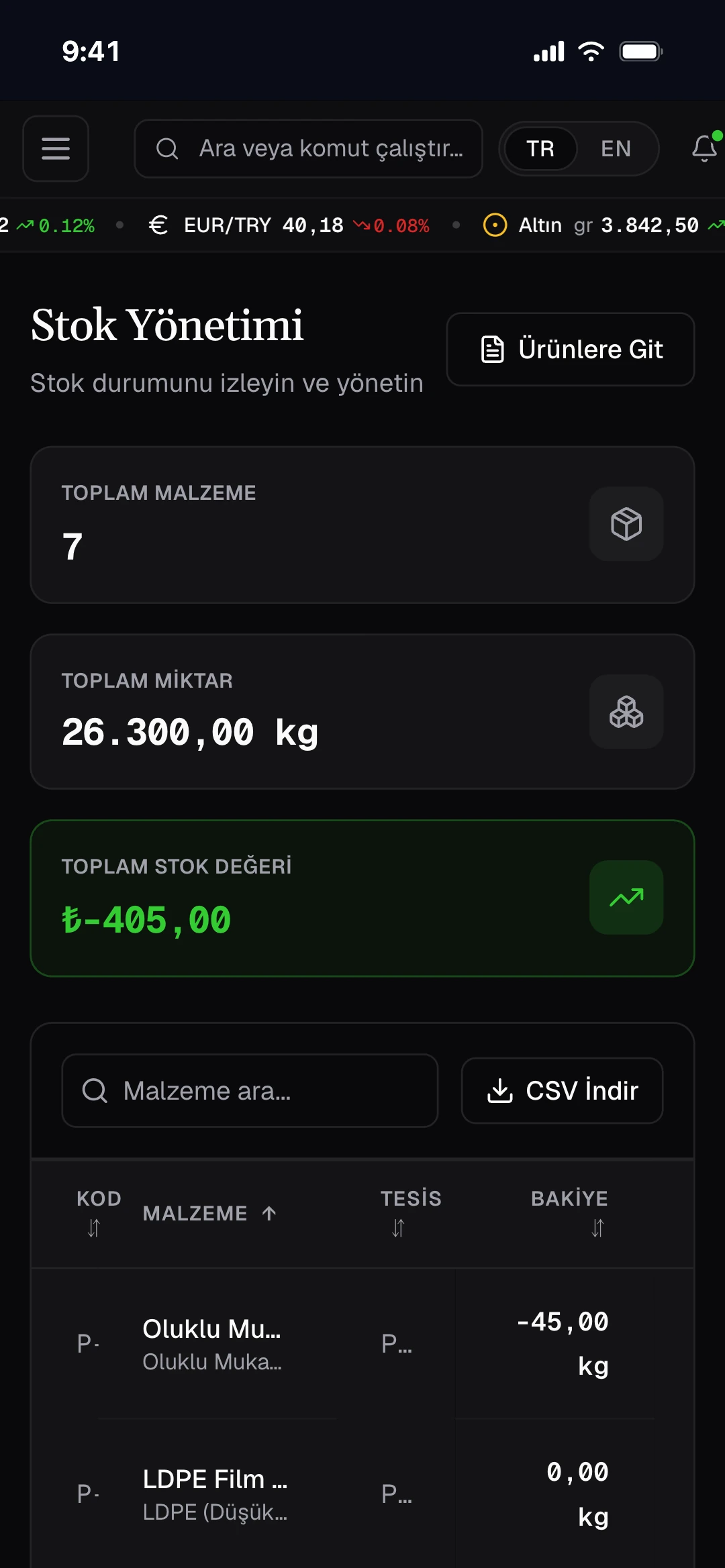
Stock, machines, personnel and waste intake sit in the same system as receivables, cash, bank and cheques. There is no second system to reconcile against.
Every movement leaves a trail
Each financial operation completes as a whole, each stock movement keeps its reason, and each document carries a traceable number. The record settles the argument.
Facilities stay separate
Several facilities run on one installation without their data mixing. Group management sees everything; a facility manager sees only their own site.
Who it is for
Manufacturers whose books and floor are kept in different places, and whose spreadsheets stop agreeing at month-end. For a single site, operations and accounts in one record; for several, separate data under one management view.
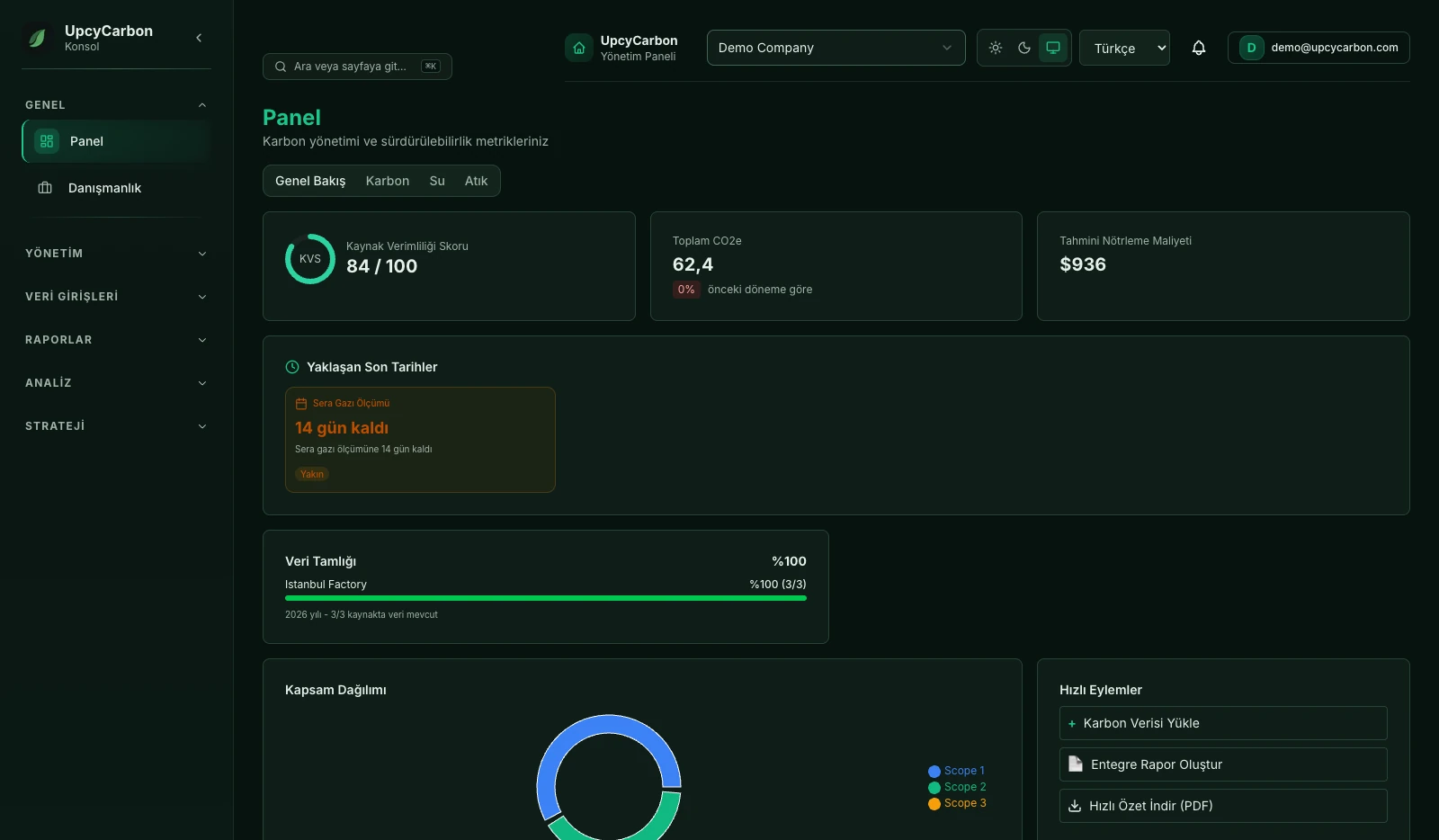
UpcyCarbonCarbon and sustainability reporting
A carbon figure is not a number. It is a chain of evidence.
The full story is on the product's own site.
The problem
An EU customer asks for embedded-emissions data, with a date attached: the CBAM definitive period began on 1 January 2026, according to the European Commission. The spreadsheet built with a consultant is produced once.
A year later nobody can reproduce it. Which factor version was used, whose data went in and who changed it were never recorded.
What it does
Every figure tied to its evidence
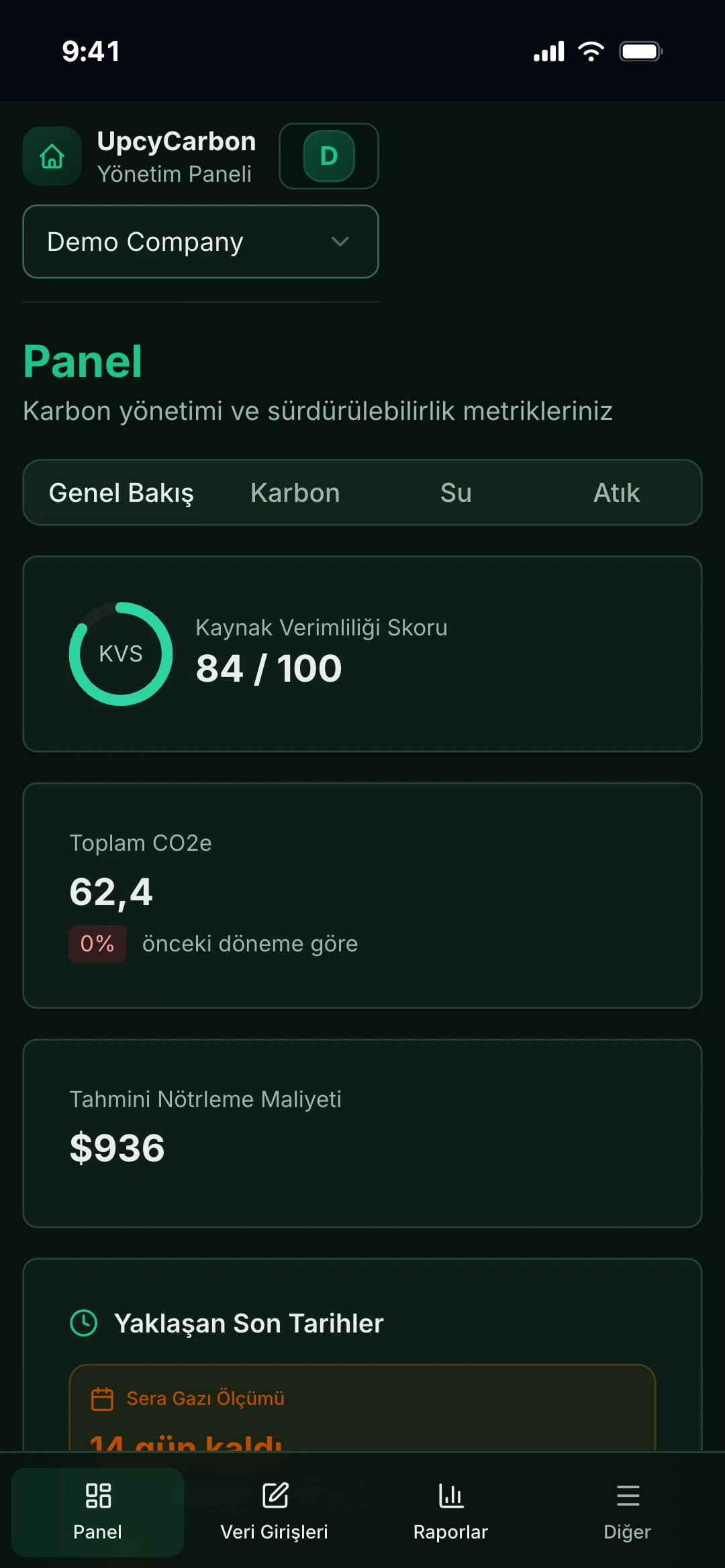
Each emission links to an activity record, an emission factor and a GWP set. Edits and exports are both recorded, with who made them and when.
Built for CBAM
Product-level embedded emissions, import records, a verification workflow and a supplier portal in one system, so Scope 3 data stops travelling as email attachments.
It does not stop at carbon
Water, waste and circularity on the same facility model, with product footprints, materiality assessment and scenarios. The next request is not a new platform.
We are preparing for Turkey's emissions trading system under Climate Law 7552. It is not offered as a feature today.
Who it is for
Exporting manufacturers with European customers, and the people responsible for their sustainability reporting — teams that want to walk into verification with the record rather than a rebuilt spreadsheet. Consultants running several clients use the same structure.
DimaAnswers from the data you already have
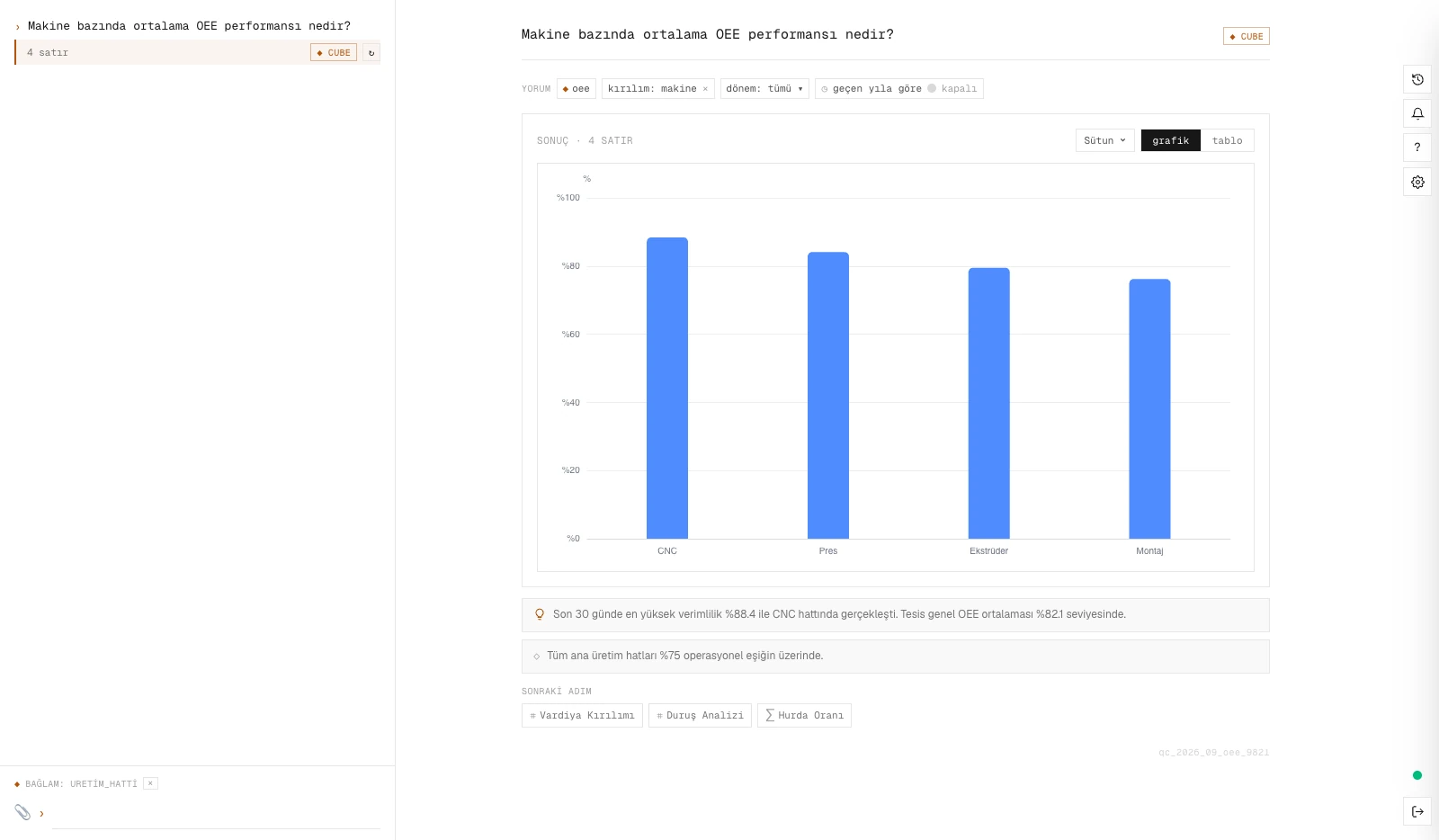
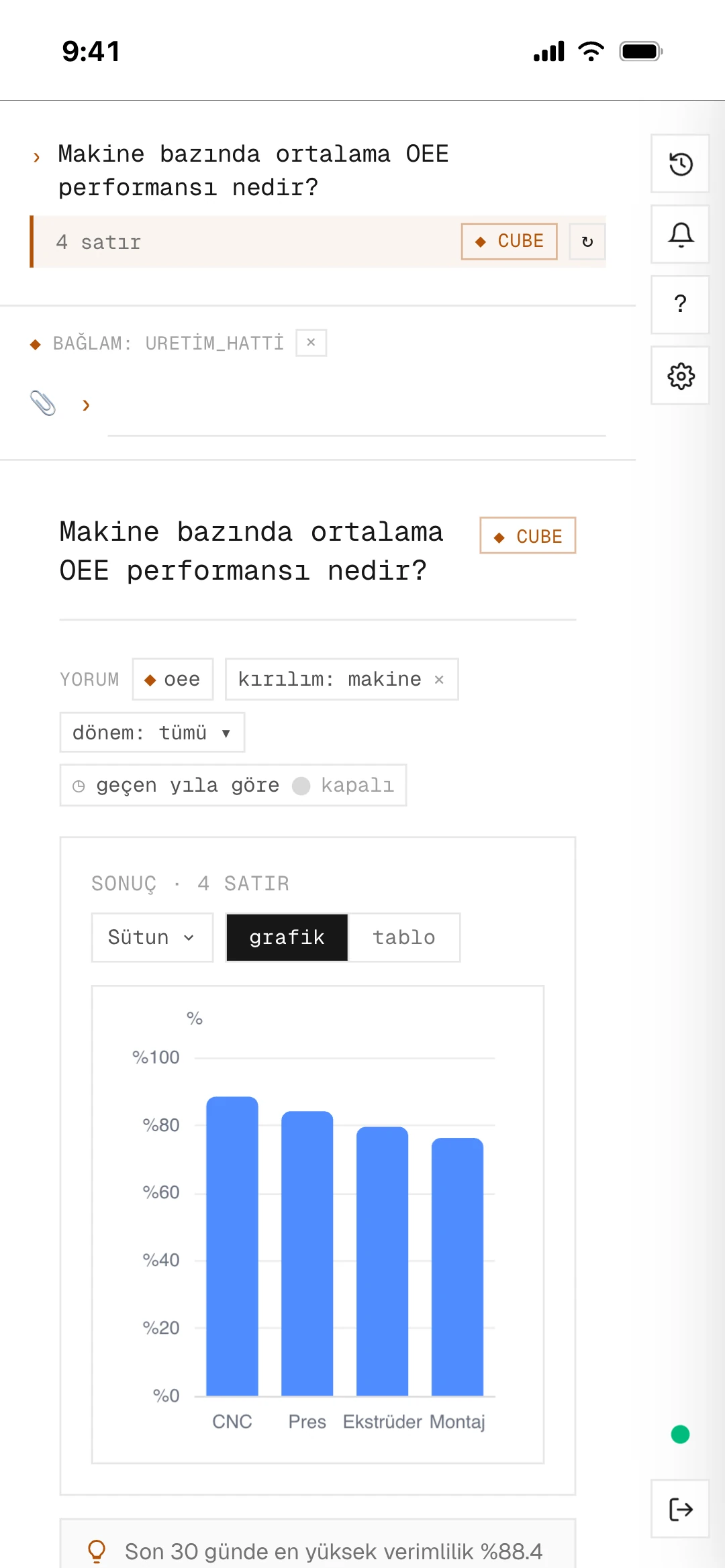
Ask in plain language. The number comes from your semantic layer, not the model.
The full story is on the product's own site.
The problem
A board question needs a number nobody can produce before the meeting. Someone exports from the ERP, builds a pivot table and emails it round.
The follow-up needs a different cut, so the cycle starts again — and before long the second question stops being asked. The tool quietly narrows what anyone is willing to ask.
What it does
The cube supplies the number
The figure is produced by the semantic layer. The model translates the question and writes the sentence; it never supplies the number. Queries are read-only and planned before they run, so they cannot change your data.
In the terms your operation uses
Answers use your own measure names rather than column names — scrap rate, not uretim_fire — in the language the operation runs in.
Every answer shows its source
Every figure carries its cube, its row count and its timestamp. You can check a number without asking us.
It sits on top of what you have
Your ERP, spreadsheets and databases stay where they are. Dima connects to them and builds a semantic layer over them.
We build the semantic layer with you, modelling how each measure is calculated in your own definitions. That is why Dima is delivered together with an implementation engagement, and why the layer is yours when it ends.
Who it is for
Owners, operations managers and finance teams who want answers fast enough to keep asking, and who expect every figure in the pack to cite its own source.
UpcyOpsA B2B operations platform for import and export workflows
Trade from request to payment in one record, where every document, vessel and payment leaves a trail.
The problem
A trade request starts informally — price, quantity and delivery port agreed over the phone. Approval lives in email, the contract in a folder, the bill of lading with the courier, the payment proof in another chat.
Work that runs on spreadsheets and chats stalls at the first missing document: which version of which paper counts, who approved it, and which milestone the payment hangs on were never recorded.
What it does
Request and approval on the record
Trade requests, their amendments and multi-step approval run in one flow. When price, quantity, port or Incoterms change, an amendment records the diff; every approval keeps who gave it and when.
The execution in plain sight
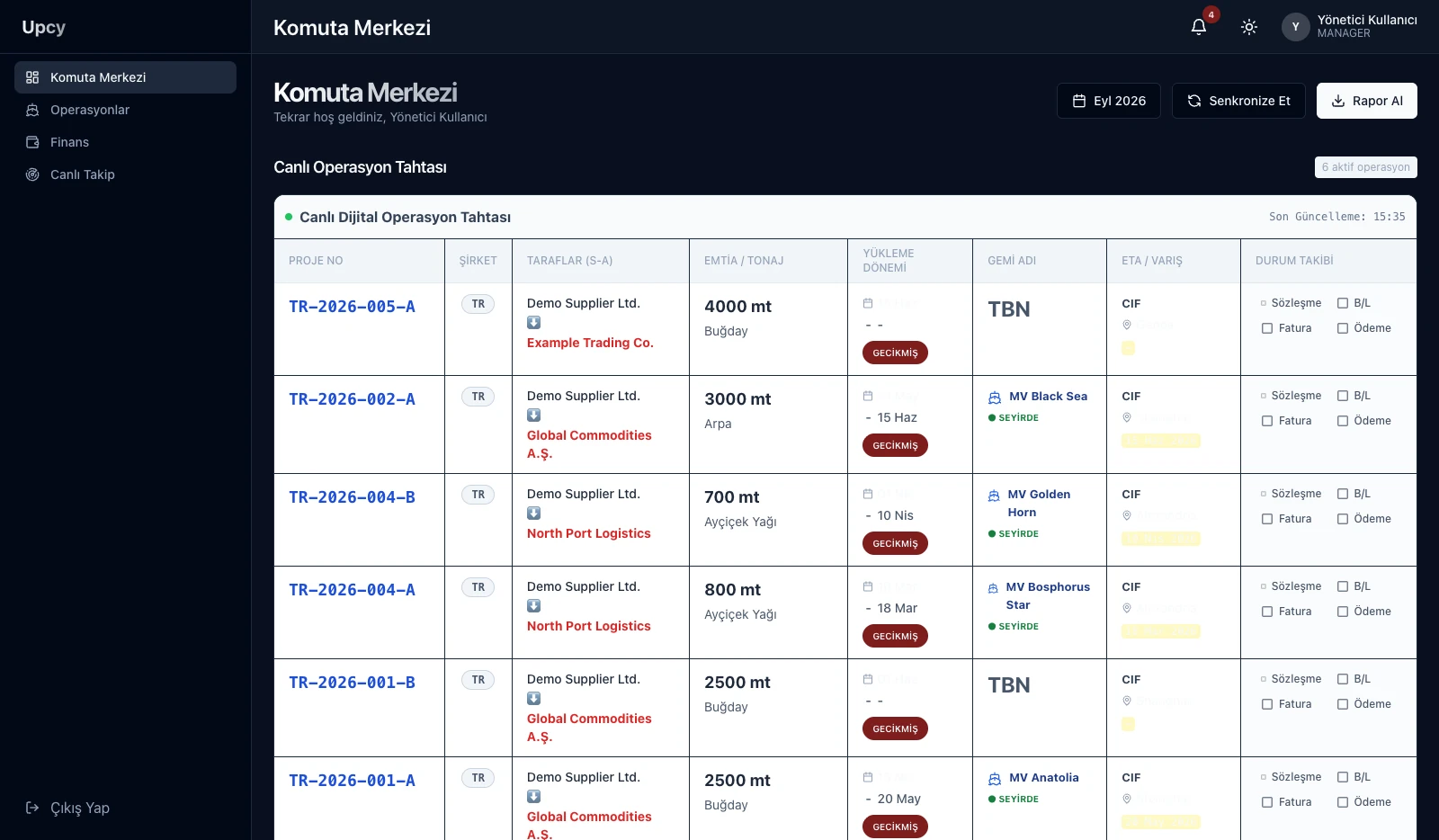
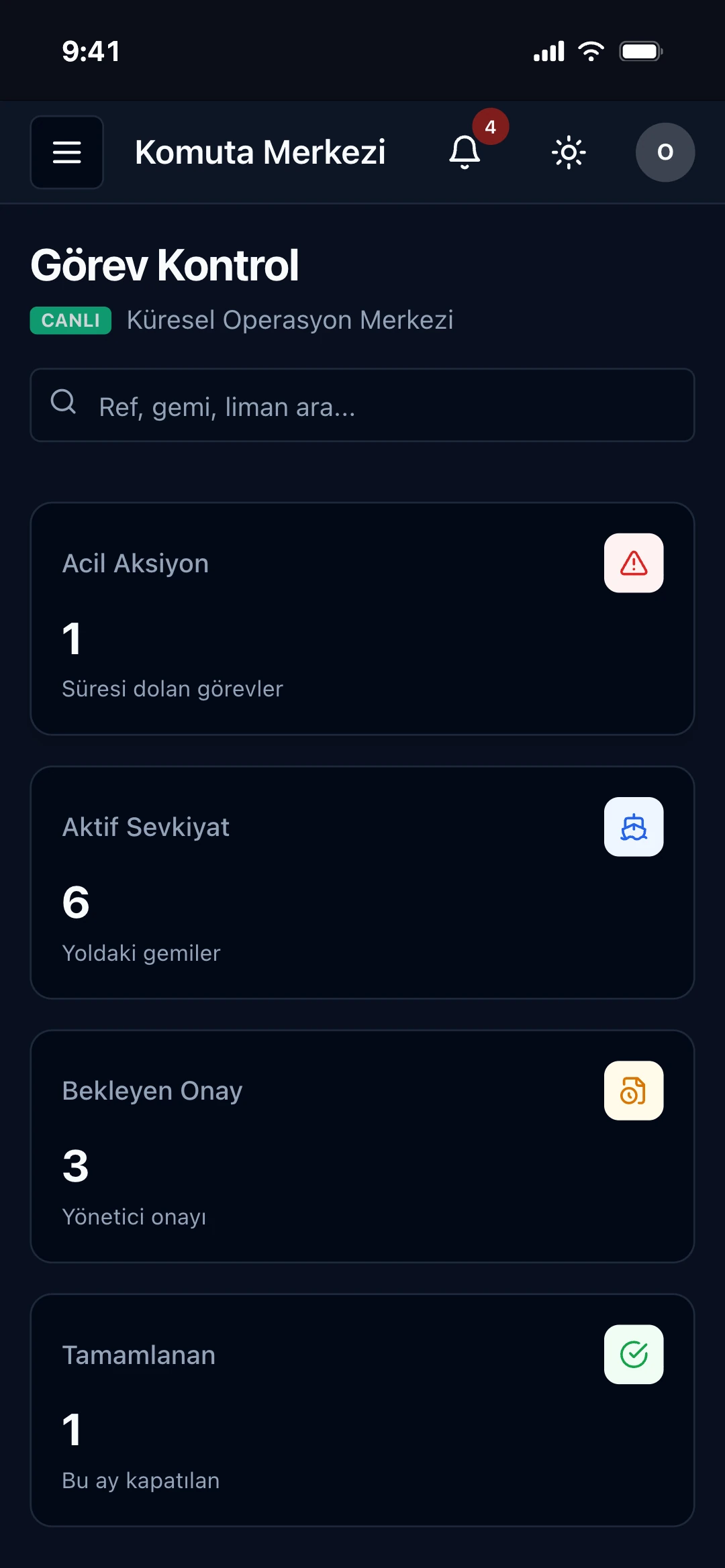
Vessel, voyage, load and discharge ports with ETA are tracked on the same screen; when a missing document or late payment holds the trade, everyone sees the same reason.
Documents and money tied to the trade
Eighteen document types, from bill of lading to certificate of origin, tracked from upload to approval; approved documents back up to Drive. Receivables and payables hang off the trade's milestones in a multi-currency ledger.
One shipment, start to finish
An approved request becomes a trade; documents, shipment and payment move along the same record's milestones.
Request and approval
The trader opens the request: product, tonnage, price, delivery port and Incoterms. Operations submits it, the manager approves or returns it. If terms change, an amendment records the diff and the original stays intact.
Contract and setup
The approved request becomes a trade: trade number, buyer-seller-logistics parties and the required document checklist generate automatically. Vessel, ports and payment terms go in.
Execution: documents and shipment
Eighteen document types tracked from upload to approval; vessel name, IMO number and ETA on the same screen. A missing document or late payment holds the trade, with the reason visible to everyone.
Finance and close
Receivables and payables generate against milestones; the multi-currency ledger converts to the reporting currency at central-bank rates. Overdue items flag on the dashboard. When goods, documents and payments are all complete, the trade closes and archives after final audit.
The details
Eighteen document types, validated end to end
Bill of lading, certificate of origin, letter-of-credit copy and fifteen more; eight states from missing to approved. Files pass mime, virus and checksum checks; approved documents replicate to the account's Google Drive folder, stored on MinIO S3 or secure disk.
Vessel and cargo on the same screen
Vessel name, IMO number, load and discharge ports, ETA and live coordinates — by sea, air, road and rail.
A multi-currency ledger
Dollars, euros, lira, sterling and francs converted to the reporting currency at central-bank rates. Receivables and payables tracked from pending to paid, overdue items flagged on the dashboard, bank accounts held with IBAN and SWIFT codes.
Everyone's remit is defined
Traders open requests, operators run documents, managers approve, finance keeps the money side; auditors watch read-only. Each desk under the holding licence sees only its own data, and every approval records who gave it and when.
Common questions
Approved documents replicate automatically to your Google Drive folder, and FX rates come from central-bank feeds. Anything beyond that — ERP, accounting — is settled in scoping: we write down which records come from where before promising anything.
Under the holding licence each desk sees only its own data: traders their own trades, managers their desk, auditors everything read-only. Sign-in is email and password, and every approval and rejection records who gave it and when.
We start with one desk: requests, the document checklist and currencies go in, and your team runs a real trade on it. Scope and timeline are written down at the end of discovery.
Who it is for
Commodity trading houses whose requests arrive by phone, whose documents travel by courier, and whose payments are chased through chat screenshots — teams shipping by vessel and working with letters of credit that want to walk into an audit with the record.

Not sure which one fits?
Tell us how you work today: which records live where, and who asks for which report. We will tell you which product fits, or that none of them does.